Blog

blog image

April 7, 2021

Long road ahead to implement EU Directive

In December this year, the new EU directive on whistleblowing will be implemented in national legislation within the Union. However, many countries are lagging behind in the work. In February this year, two-thirds of all EU countries had either not started the work, or had just initiated it. For Sweden, the preliminary legislation proposal was for a consultation round from last summer until mid-October 2020, which means that Sweden is far ahead compared with the rest of the Union. At the same time, it should be mentioned that the legislative process differs between the countries, for example in terms of consultation procedures. Furthermore, countries that haven't come as far can start from the work done by, for example, Sweden. This makes both the process potentially faster and provides the conditions for more uniform implementation within the Union.
blog image

March 23, 2021

Gloomy development regarding bribes in Sweden

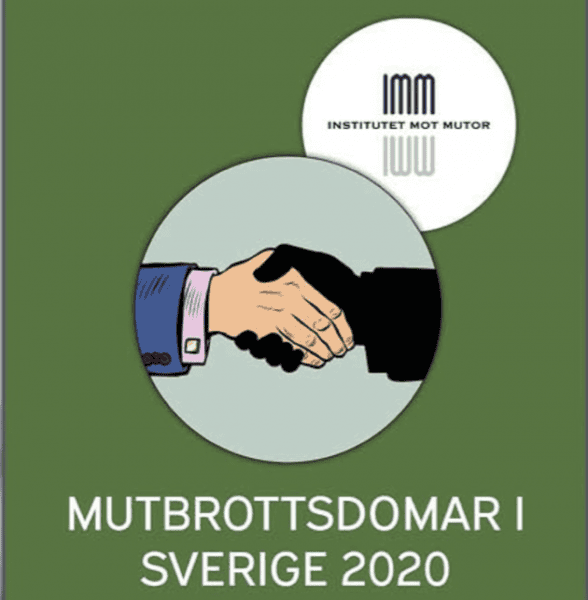
Since 2010, the Swedish Institute against Bribery (IMM) has continuously collected and summarized lawsuits about bribery. The purpose is, among other things, to provide an idea of ​​what corruption can look like in individual industries and make it easier for the business community to assess the corruption risks that may arise. The compilation for 2020 (Swedish) constitutes a particularly gloomy reading as the sum of the total bribes during the year increased by 246 per cent compared with the previous year. The actual extent of the problem of attempted bribery is naturally impossible to know. Typical cases concern different types of government officials, such as driving examiners, prison staff or decision-makers in government agencies. The pattern is typical and confirms the picture that corruption risks tend to arise where the public sector encounters private citizens or companies. The work against corruption should be conducted widely. From the business side, it is important to have knowledge of risk areas and actively work with attitudes within the organizations. From the public sector, there should be a long-term ambition to reduce incentives by limiting the value of transfers managed by individual civil servants, especially in areas that open up for arbitrary assessments. The very sharp increase in the numbers is in itself very ominous and points to a turning point where a traditionally low Swedish acceptance of cheating seems to be fading. It thus becomes more and more up to authorities and companies to work with organizational cultures when society is unable to maintain its common values.
blog image

February 11, 2021

No action in Swedish Government's anti-corruption plan

According to Claes Sandgren, professor emeritus in civil law at Stockholm University, the Swedish government's action plan against corruption is not enough. In a debate article on DN Debatt (Swedish) he criticizes the plan for lacking substance, not being an actual plan and without any actionable commitment.  Sandgren further believes that the "action plan's" focus on the state level is unfortunate, as 80 percent of public procurement in Sweden pertains to municipalities. Despite the fact that Sweden is often viewed as a country with low corruption (see previous blog post), the EU Barometer 2019 shows that three out of ten companies believe that in the last three years they have lost public procurement contracts due to corruption. – The municipal procurement is carried out to a significant extent by the publicly owned companies, which are governed by politicians and civil servants who also have assignments in bodies that review the procurements, Sandgren says. Public Affairs Magazine (Swedish) also reports on criticism from Transparency International, which calls on the Government to supplement its plan with action.
blog image

February 10, 2021

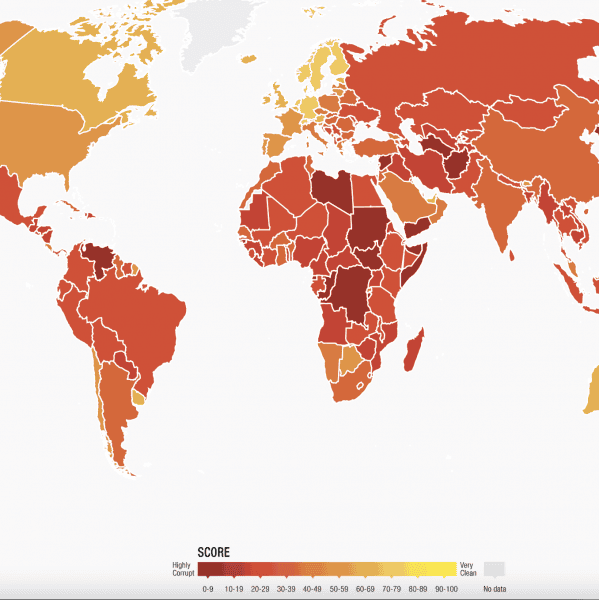
Transparency International's latest corruption perceptions index

Europe remains the least corrupt region in the world, according to Transparency International's latest report. The report only measures perceived corruption in the public sector and not the actual underlying corruption, but should still be seen as a reasonable estimate of the situation in the world. Furthermore, the figures are produced annually and with the same model, which means that the general development can be followed quite well. New Zealand and Denmark are at the top, while Sweden, Finland, Switzerland and Singapore share third place. The Nordic region is generally well placed in the survey, although this blog has previously pointed to a partially inflated self-image in Sweden. In addition, the Nordic countries have societies with large public sectors, which in itself tends to increase the risks of corruption. Seen over a few years, the development has gone in the wrong direction in Hungary, Poland and Malta, among others, while Italy, Estonia and Greece stand out as positive examples in Europe.
blog image

January 25, 2021

The law firm Reims & Co in Helsinki has chosen Lantero as the platform for its whistleblowing offering

At the end of the year, the new EU whistleblowing directive will be implemented. It will among other things, require all companies with at least 50 employees to have a whistleblower channel that meets certain criteria, e.g. associated to anonymity, reporting and independent handling of cases. This will be a challenge as many companies lack internal resources for an independent investigation and for establishing the necessary technical solutions. What Reims & Co now can offer is a flexible way, even for smaller companies, to get a whistleblower channel that meets all the new rules. Awareness of the new directive is still low. Reims & Co is now launching a series of webinars on the theme. If you are interested, you can register here the first webinar is on the 11th of feb. (note that the webinar is held in Finnish).
blog image

January 21, 2021

Bribe case in regional health-care administration

The Swedish National Unit against Corruption is prosecuting 12 people in the Östergötland Region for taking bribes. (Article in Swedish) The bribes are items such as mobile phones, tablets, video game consoles and gift cards with a total value of just over SEK 20,000. The company behind the suspected bribes, Labcenter, was involved in a similar case with the Swedish Maritime Administration just last autumn. That bribery situations are prevalent where the private and public sectors meet is a well-known pattern. Also common is the degree of ignorance that seems to characterize the people involved. Probably the relatively low sums have played a part in creating a feeling that ”this is ok". It is also possible that the Swedish self-image of not being a corrupt people in itself may be a factor that makes Swedes extra clueless and inclined to rationalize their behavior. As an organization, you can help your employees become more aware by creating forums where these issues are actively discussed. The LAN rule (as in Lantero) helps individuals to assess what is ok: Is it Legal? Is it Appropriate? Do I want to read about this in the Newspaper?
blog image

October 12, 2020

Increasing number of people looking the other way

Nordic Business Ethics Network and The Swedish Anti-Corruption Institute (IMM, Institutet Mot Mutor) hosted a seminar on corruption and the rationalization by individuals.  Among other things the following issues were addressed:  Why do we engage in unethical behaviour?  Why don't we act when we encounter it? What can we do about it?  It is depressing to notice that the number of people who say that they have refrained from acting when encountering unethical behavior has increased since last year. This clearly shows that the topic is more relevant than ever.  Key takeaways from the webinar:  There is a common misconception that fraud and corruption have no victims. We need to see the bigger picture how fraud and other misconduct is destroying trust and in the long run seriously damages the business and society.  But we cannot simply rely on the individual to be strong enough to blow the whistle. We must not underestimate the loyalty to the team that often can be stronger than the will to be honest. It might not even be experienced as an unethical behavior when acting in accordance with the team spirit.  So what can we do? Establish relevant forums and keep talking about the issue. Normalize the subject. And most of all, walk the talk. Top management must make it clear what is accepted behavior. If employees engage in misconduct, in many cases they act in accordance with the defacto culture. Even if the policy says something else.   Please read the reports: Nordic business ethics10 förklaringsmodeller bakom mutor  
blog image

October 9, 2020

Déjà vu for whistleblower Anders Kompass

Anders Kompass received a lot of attention when he, as a high-ranking official within the UN, fought with his own organization to come to terms with systematic sexual abuse in the Central African Republic. Kompass left the UN in 2016 and made clear what he thought would need to happen to address the problems. In an article, he describes a feeling of déjà vu when a recent report shows that similar problems still persist. The case is somewhat typical in that the problem is mainly about the willingness to remedy the irregularities. Known problems are often swept under the rug if they become uncomfortable for senior management. As Kompass sees it, the solution is to build robust structures, with sufficient resources, strict independence and a clear mandate. Just as with the establishment of whistleblower systems, the reporting channel is only a small part of a larger puzzle, where the goal is mainly about building healthy organizational cultures.
blog image

October 7, 2020

Trial on bribes within Swedish Property Agency

In 2017, investigative journalists att TV show "Kalla fakta" uncovered extensive irregularities within the Swedish Public Property Agency. The trial is now underway where six people, including a former property manager at the authority, are suspected of bribery. (Article in Swedish)  The case is a clear example of a lack of control in public operations and an inability to act on malpractice. For several years the former employee Richard Lindvall pointed out the misconduct he saw to the General Manager of the authority, before he chose to go external with his suspicions. As a whistleblower in the case, he is now the main witness in the trial. (Article in Swedish) The case can be seen as an example of particularly nefarious individuals, or as a predictable result of a naive culture in the public sector, lax supervision and insufficient tools for the oversight bodies. As seen many times before, bribes seem especially prevalent where the public sector meets the private sector. What starts on a small scale is gradually growing, and where there are no individuals as owners, control seems to be laxer.  Richard Lindvall describes the frustration among officials within the National Audit Office over their insufficient tools. As new EU regulation will make whistleblower systems mandatory, the toolbox will be expanded. But it remains to be seen whether it will drive any actual change.
blog image

September 23, 2020

ISO standard for whistleblower systems

In the summer of 2021, the new ISO standard for whistleblower systems is expected to be published. Lantero is involved in the process through the SIS committee representing Sweden. The standard is voluntary and will be a guide for organizations to create robust and well-functioning whistleblower systems. The work with the standard takes into consideration that the conditions for different organizations differ greatly, but that there are many issues that can be addressed through common general principles.  While it can be difficult to set up general rules for how reporting or processing should be set up, it is possible to point out which issues need to be discussed, how one can reason about risk areas or possible conflict areas given industry, size or type of organization. A further challenge is, of course, that the standard should work internationally, despite the fact that the degree of maturity when it comes to whistleblower systems differs greatly and that organizations can function quite differently in different countries.
6of 7